PBX support and programming
Troubleshooting, extension changes, feature-code support, voicemail, routing, auto attendant, and practical cleanup for Panasonic environments.

MD3 helps NYC and New Jersey businesses support existing Panasonic PBX systems, bridge them to modern SIP trunks, and add a practical web dashboard for call detail records.
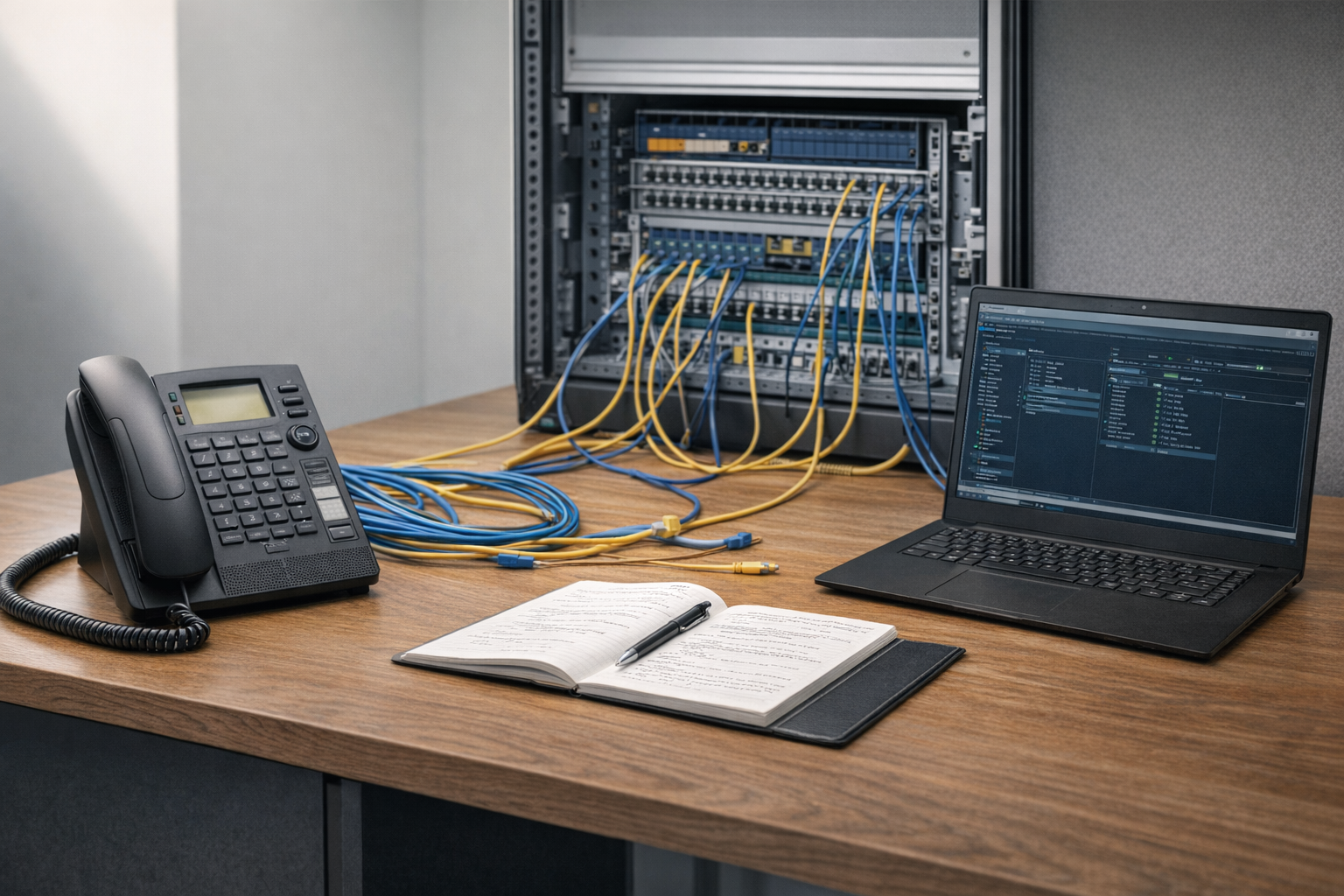
For the right site, replacing everything is not always the first move. MD3 can help stabilize the existing system, modernize the trunk side, and document the call activity around it.
The strongest offer is continuity plus modernization: keep what works, fix what is failing, and add the reporting layer the old system never had.
Troubleshooting, extension changes, feature-code support, voicemail, routing, auto attendant, and practical cleanup for Panasonic environments.
Configuration support for sites that want to connect an existing Panasonic PBX to modern SIP trunk service instead of relying only on older line types.
A custom server workflow can collect SMDR / CDR call records through the PBX serial or COM-port output and present them in a web UI.
MD3 currently works with Panasonic NCP1000 and TDE200 equipment. When appropriate and available, these systems can support repair, replacement, expansion, or lab-tested migration work.
The page is written for buyers who already have a working Panasonic environment or a clear reason to keep an on-premise PBX running.
Sites that need reliable local calling, voicemail, fax or analog line considerations, and simple staff workflows.
Large-footprint businesses where existing cabling, phones, paging, and uptime needs make a careful continuity plan valuable.
Properties that may still depend on room, front-desk, tenant, doorphone, or specialized call-routing behavior.
Businesses that own Panasonic phones and cards and want to avoid unnecessary per-seat cloud subscriptions.
Technology partners that need a white-label PBX specialist for MACD work, SIP cutovers, or stubborn voice issues.
Operations that want better visibility into call volume, missed calls, duration, extensions, and trunk usage.
These are service-led offers. Hardware is positioned as part of a support or continuity project, not as a standalone commodity sale.
Review the system model, cards, licenses, trunk setup, extension map, and immediate support risks before recommending changes.
Plan and configure the SIP trunk side while keeping the working Panasonic system and user workflow as stable as possible.
Connect call detail output to a small server workflow and provide browser-based reporting for operational review.
Use tested Panasonic NCP1000 or TDE200 hardware when a site needs a realistic repair or continuity option.
Tell MD3 the model, phone types, trunk provider, location, and the problem you are trying to solve. We can help confirm whether support, SIP trunk work, a call detail dashboard, or replacement hardware is the right next step.